
San Francisco · Marina District
Collision Repair in San Francisco.
Frame measurement on every intake. Factory-matched paint off your VIN. Every major insurer handled. Lifetime warranty on body and paint. Same shop on Lombard Street since 2013.
Written by Jack Chew, owner of Lombard Auto Body, collision and frame work on Lombard Street since 2013. Reviewed June 2026.
If your car isn't drivable
Call us at (415) 292-2962. We can arrange a tow direct to the shop and start the insurance documentation while it's on the truck.
If you have a claim number
Bring it with you to the estimate. We'll contact the adjuster, document the damage in their system, and handle supplements when hidden damage shows up during teardown.
If you haven't filed yet
Stop by for a free estimate first. If repair cost is close to your deductible, paying out of pocket may make more sense. We'll be straight about it.
What happens when you bring your car in
Most San Francisco collision repairs follow the same arc. Knowing it ahead of time makes the waiting easier.
- 1
Free written estimate
We walk the vehicle, photograph everything, and write a line-item estimate in whichever insurance estimating system your carrier uses (CCC, Mitchell, Audatex). Most estimates take 20–30 minutes. You leave with a paper copy.
- 2
Adjuster review & authorization
If you're filing insurance, the carrier's adjuster reviews the estimate and authorizes the repair. We negotiate any disagreements on your behalf: what gets repaired vs replaced, OEM vs aftermarket parts, blend panels for color match.
- 3
Drop-off & teardown
You drop the car off. Rental coordination starts the same day if your policy includes it. We tear down the damaged areas. Hidden damage almost always shows up at teardown, a bent reinforcement bar behind a "scratched" bumper, a cracked headlight mount, a leaking AC condenser. At this stage we also run a pre-repair diagnostic scan, pulling every stored fault code so we know up front which safety and ADAS systems were affected and which will need recalibration before the car goes back together. We document, photograph, and submit a supplement to the adjuster. Repair doesn't proceed until that supplement is approved.
- 4
Frame measurement
Every collision intake gets a frame check. If the unibody is within factory tolerances, you get the printout for your records. If it isn't, we pull it back to spec on the bench and measure again until the structural integrity is restored to factory tolerances. Frame work that's skipped or guessed-at compromises crash safety and causes tire wear, alignment problems, and resale loss years later.
- 5
Body & paint
Damaged panels are repaired or replaced. Any bare metal exposed by welding or panel replacement gets corrosion protection re-applied: epoxy primer on the surface, cavity wax inside box sections, so the repair doesn't rust from the inside out years later. New panels are sanded, primed, color-matched off your VIN and verified against the adjacent panel (because sun-fade shifts every car). Final clear-coat goes on in our paint booth. Adjacent panels get blended so the transition is invisible under varied light. More on our paint & refinishing process →
- 6
Quality check & pickup
Before the car comes back to you, we run a post-repair diagnostic scan, clearing and verifying fault codes and confirming the safety systems (cameras, radar, and other ADAS sensors) read true, calibrating or coordinating calibration where the vehicle requires it. Then a final walk-through with you on-site: we point out the work, hand over the lifetime warranty paperwork, and you pay the deductible (if any). The car comes back washed, vacuumed, and clay-bar polished, small touches, no extra charge.
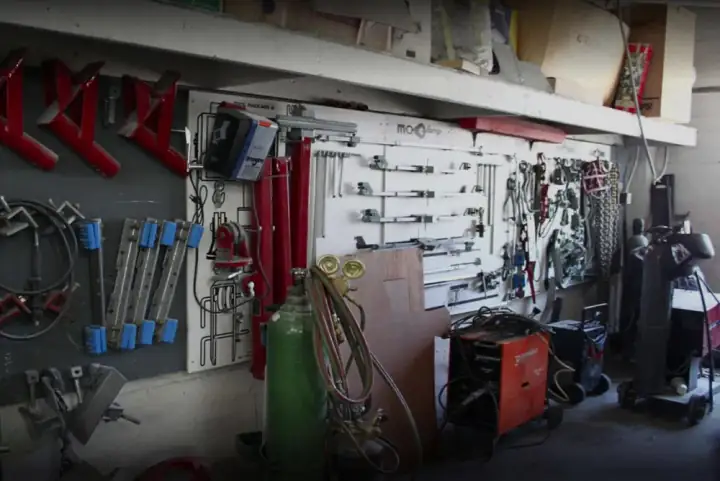
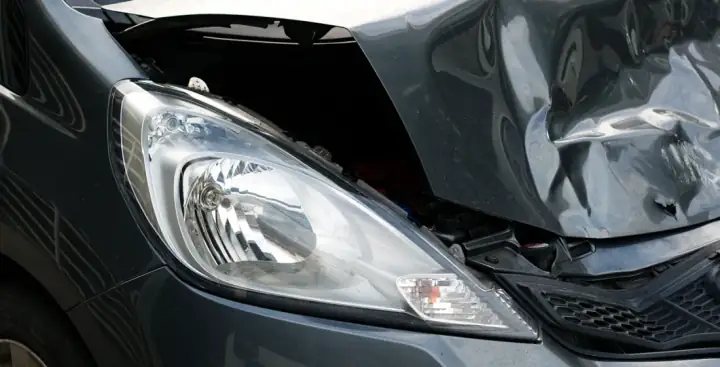
The bench, and a real intake.
Frame measurement isn't just a line on the estimate. It's a bench we own and pull on in-house. Here's the equipment, and the kind of front-end damage that comes through the door.
Lifetime warranty on body & paint
Lifetime warranty on collision repair, auto body work, and paint. For as long as you own the vehicle. Covers paint adhesion, color match, and structural workmanship.
1-year limited warranty on mechanical parts on any mechanical parts replaced during the repair. Full terms printed on every invoice. Keep it. See the full warranty →
Insurance, handled.
We work with every major U.S. carrier and write estimates in CCC, Mitchell, and Audatex. We document, negotiate supplements, manage parts ordering, and bill the carrier directly. You pay the deductible at pickup.
Read the full insurance walkthrough →Common questions about collision repair
How much does collision repair cost in San Francisco?
How long does collision repair take?
Do I have to use my insurance's recommended body shop?
OEM parts vs aftermarket: what's the difference?
Does my car need an ADAS or sensor recalibration after collision repair?
How do I know if my car's frame is bent?
Does collision repair affect the resale value of my car?
What happens if my car is a total loss?
What's the warranty on collision repair work?
Will you handle the rental car coordination?
Got a damaged car and a claim number?
Drop in for a free written estimate, or call (415) 292-2962. We'll handle the insurance side from there.